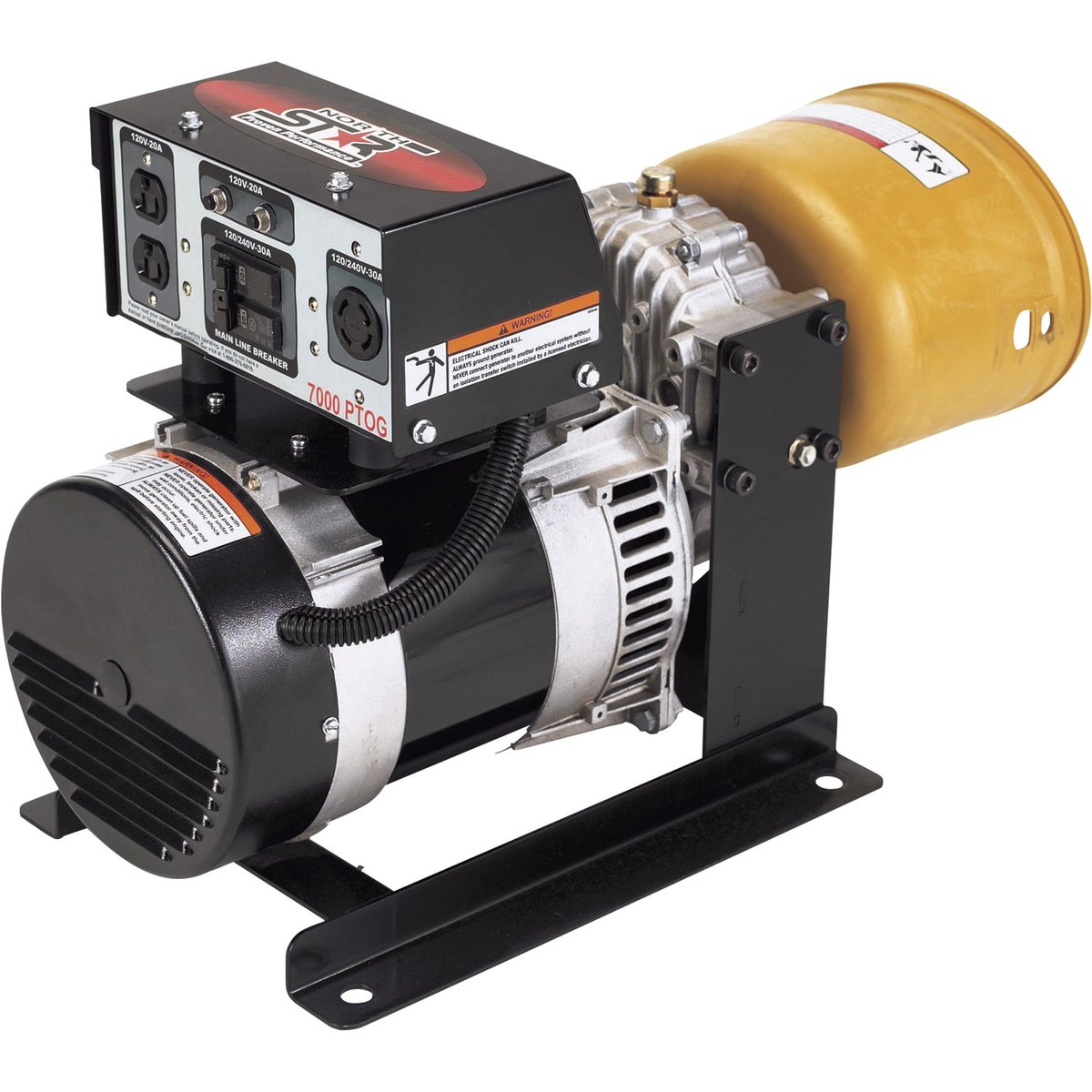
Few things offer peace of mind quite like reliable power, especially when the grid goes down or you're far from an outlet. Whether you're safeguarding your home against outages, powering a remote job site, or simply enjoying the great outdoors, finding the right generator is crucial. Northern Tool, a trusted name for serious tools and equipment, offers an impressive array of options. But with so many choices, how do you pick the one that truly fits your needs?
This guide cuts through the jargon, helping you understand the different types of generators available at Northern Tool and how to choose the perfect one for your world. We'll explore everything from compact portable units to robust whole-home systems, ensuring you make an informed decision that keeps your lights on and tools running.
At a Glance: Key Takeaways
- Three Main Types: Northern Tool primarily carries Portable, Inverter, and Standby generators, each suited for different power needs and scenarios.
- Portable Generators: Best for basic backup, job sites, and recreational use; generally louder and less precise power.
- Inverter Generators: Ideal for sensitive electronics and quiet operation; compact, fuel-efficient, and produce clean power.
- Standby Generators: Permanent, automatic home backup; run on natural gas or propane, providing seamless power during outages.
- Key Selection Factors: Consider wattage (starting vs. running), fuel type, noise level, features (electric start, GFCI outlets), and compliance (EPA/CARB).
- Safety First: Always operate generators outdoors, away from windows, and ensure proper ventilation to prevent carbon monoxide poisoning.
Why Reliable Power Matters (and Why Northern Tool is a Smart Stop)
Life doesn't stop for a power outage. From keeping your refrigerator cold and medical equipment running to charging essential devices and powering tools on a remote construction site, consistent electricity is non-negotiable. That's where a generator steps in, acting as your personal power plant to bridge the gap when utility power falters or simply isn't available.
Northern Tool has built a reputation on offering durable, high-performance equipment for both professionals and serious DIYers. Their generator selection reflects this commitment, featuring a range of reputable brands and models designed to tackle diverse challenges. They understand that a generator isn't just a purchase; it's an investment in preparedness, productivity, and peace of mind.
Decoding Generator Types at Northern Tool
When you first dive into the world of generators, the sheer variety can feel overwhelming. However, most options available at Northern Tool fall into three primary categories, each with distinct advantages and ideal applications. Understanding these core types is your first step toward making the right choice.
1. Portable Generators: Your Go-To for Flexible Power
Portable generators are perhaps the most common and versatile type, recognizable by their open frame, engine, and often a set of wheels for easy transport. They're designed for mobility, making them perfect for situations where you need power on demand in various locations.
What They Are:
These generators feature a combustion engine that drives an alternator, directly producing AC electricity. They come in a wide range of wattages, from smaller units capable of running a few lights and chargers to larger models that can power essential home appliances during an outage. Most portable generators run on gasoline, though dual-fuel options are increasingly popular.
Ideal Uses:
- Emergency Home Backup: Powering essential circuits like a refrigerator, some lights, a fan, or a well pump during a blackout.
- Job Sites: Running power tools, air compressors, and other equipment where grid power isn't available.
- Recreational Activities: Camping, tailgating, or powering RVs, though their noise level can sometimes be a consideration.
- Outdoor Events: Providing electricity for lighting, sound systems, or food vendors.
Key Characteristics:
- Mobility: Equipped with wheels and handles for easy movement.
- Power Output: Varies widely, from 1,000 to over 10,000 running watts.
- Fuel: Primarily gasoline, but dual-fuel (gasoline and propane) models are common.
- Noise Level: Generally louder than inverter generators, often ranging from 65 dB to 80 dB, which can be comparable to a vacuum cleaner or a busy street.
- Power Quality: Produces "dirty power" (higher Total Harmonic Distortion or THD) compared to inverters, making them less suitable for sensitive electronics without additional protective devices.
Pros:
- Cost-Effective: Typically the most budget-friendly option for their power output.
- High Power Output: Many models offer substantial wattage for heavy-duty tools or multiple appliances.
- Robust & Durable: Built to withstand demanding conditions.
- Versatile: Suitable for a broad range of applications.
Cons:
- Noise: Can be quite loud, which might be disruptive in residential areas or quiet environments.
- Fuel Storage: Gasoline requires careful storage and can degrade over time.
- Power Quality: Not ideal for sensitive electronics like laptops, smart TVs, or medical devices without a surge protector or line conditioner.
- Manual Operation: Requires manual setup, fueling, and starting during an outage.
2. Inverter Generators: Quiet, Clean Power for Sensitive Devices
Inverter generators represent a significant leap forward in portable power technology. While they still use a combustion engine, their innovative design allows for much cleaner power output, quieter operation, and greater fuel efficiency.
What They Are:
Unlike conventional portable generators, inverter generators don't directly produce AC power. Instead, their engine connects to an alternator that generates high-frequency AC power, which is then converted to DC, and finally "inverted" back into stable AC power. This multi-step process results in a pure sine wave output, mimicking the clean power from your home's wall outlets.
Northern Tool often carries excellent examples like the Powerhorse Inverter Generator, which boasts features like less than 2% Total Harmonic Distortion (THD), making it safe for sensitive electronics. Its Engine Smart Control (ESC) also helps with fuel savings by adjusting engine speed based on the load.
Ideal Uses:
- Sensitive Electronics: Powering laptops, smartphones, televisions, gaming consoles, and medical devices without risk of damage.
- Camping & RVing: Their quiet operation makes them perfect for campgrounds or remote cabins where noise restrictions apply.
- Tailgating & Outdoor Events: Enjoy power without disturbing neighbors.
- Light Home Backup: Ideal for running a refrigerator, lights, and charging devices during a short outage.
Key Characteristics:
- Clean Power: Produces a "pure sine wave" with very low THD (<3%), essential for sensitive electronics.
- Quiet Operation: Much quieter than conventional portable generators, often running at 50-60 dB (conversation level).
- Fuel Efficiency: Engine Smart Control (ESC) or Eco-Throttle technology adjusts engine speed to match the load, saving fuel and extending run times.
- Compact & Lightweight: Often more portable and easier to store than conventional generators of similar wattage.
- Parallel Capability: Many models can be linked together with a special kit to double the power output.
Pros:
- Safe for Electronics: The primary benefit, protecting your valuable devices.
- Low Noise: Enjoy power without the roar of a traditional generator.
- Excellent Fuel Economy: Less time spent refueling, more money saved.
- Highly Portable: Easy to transport and set up.
Cons:
- Higher Upfront Cost: Generally more expensive than conventional portables with similar wattage.
- Lower Peak Wattage: While improving, most individual inverter generators typically offer lower maximum power output compared to the largest portable models.
- Maintenance: Still requires regular maintenance like any combustion engine.
3. Standby Generators: Seamless, Whole-Home Protection
For the ultimate in home power reliability, standby generators are the gold standard. These are permanently installed systems that automatically kick on the moment your utility power fails, offering seamless protection without any manual intervention.
What They Are:
Standby generators resemble an outdoor air conditioning unit and are installed outside your home, usually connected to your natural gas line or a large liquid propane (LP) tank. Paired with an automatic transfer switch (ATS), they constantly monitor your home's power supply. When an outage occurs, the ATS detects it, signals the generator to start, and then safely switches your home's electrical load from the utility to the generator, all within seconds.
Ideal Uses:
- Whole-Home Backup: Powering an entire house, including HVAC, large appliances, and all outlets.
- Long-Term Outages: Designed to run for extended periods as long as fuel is supplied.
- Critical Needs: Essential for homes with medical equipment, sump pumps, or businesses that cannot afford any downtime.
- Convenience: Provides completely automatic, hands-off operation.
Key Characteristics:
- Automatic Operation: Starts and stops automatically without user input.
- Permanent Installation: Requires professional installation, including electrical and fuel line connections.
- Fuel Source: Primarily natural gas or liquid propane, providing a continuous fuel supply (no refueling needed if connected to natural gas).
- High Power Output: Available in sizes ranging from 7 kW to 22 kW or more, capable of powering entire homes.
- Durability: Housed in weather-resistant enclosures, built for long-term outdoor exposure.
- Quiet (Relatively): While powerful, they are generally designed to be quieter than portable generators of similar output, often around 60-75 dB.
Pros:
- Ultimate Convenience: Completely automatic, hands-off power during an outage.
- Seamless Transition: Minimal interruption to your daily life.
- Unlimited Run Time (with natural gas): As long as the natural gas supply is uninterrupted.
- Increased Home Value: A significant amenity that adds value to your property.
- Robust Power: Can power virtually anything in your home.
Cons:
- High Upfront Cost: Significant investment for the unit, installation, and transfer switch.
- Professional Installation Required: Cannot be a DIY project due to electrical and fuel line complexities.
- Fuel Dependency: Requires connection to natural gas or a large, regularly filled LP tank.
- Maintenance: Still requires regular professional servicing to ensure reliability.
Beyond Type: Key Considerations When Choosing Your Northern Tool Generator
Once you understand the basic types, it's time to drill down into the specifics. Making an informed decision involves more than just picking a category; it's about matching features and specifications to your unique needs. You can explore Northern Tool's diverse offerings and detailed specifications to find your perfect match. Find options that meet every budget and power need when you Explore Northern Tool generators.
1. Wattage: Matching Power to Your Needs
This is arguably the most critical factor. Generators are rated in watts, and you'll typically see two numbers: starting watts (also called surge watts) and running watts (also called rated or continuous watts).
- Running Watts: The continuous power a generator can produce to keep appliances operating.
- Starting Watts: The brief burst of extra power needed to start motor-driven appliances (like refrigerators, air conditioners, or power tools) that have an initial surge when they first kick on. This surge can be 2-3 times their running wattage.
How to Calculate Your Power Needs:
- List Your Essentials: Make a list of all the lights, appliances, and tools you absolutely need to power simultaneously.
- Find Wattage: Look for the wattage (W) listed on the appliance label or in its manual. If it only lists amps (A) and volts (V), multiply A x V = W.
- Identify Starting Watts: For motor-driven items, note their starting wattage (if available) or use an online calculator to estimate it.
- Sum Running Watts: Add up the running wattage of all items you want to power simultaneously.
- Identify Highest Starting Wattage: Find the single appliance with the highest starting wattage on your list.
- Calculate Total: Add the total running watts to the highest single starting wattage. This sum gives you a good estimate of the minimum starting watts your generator needs.
Example Scenario:
You need to power a refrigerator (600 running watts, 1800 starting watts), a few lights (400 running watts total), and charge phones (100 running watts total).
- Total running watts: 600 (fridge) + 400 (lights) + 100 (phones) = 1100 running watts.
- Highest starting watts: Refrigerator at 1800 watts.
- Minimum Generator Running Watts: 1100 W
- Minimum Generator Starting Watts: 1100 W (total running) + (1800 W - 600 W, difference for fridge's surge) = 1100 + 1200 = 2300 W. Or, more simply, take your total running watts and ensure your generator has at least the starting watts to kick off your largest motor-driven item in addition to running everything else. A generator with 2500-3000 starting watts and 1500-2000 running watts would likely cover this.
Common Appliance Wattages (Estimates):
| Appliance | Running Watts | Starting Watts |
| :-------------------- | :------------ | :------------- |
| Refrigerator (16 cu ft) | 600 | 1800 |
| Sump Pump (1/3 HP) | 800 | 1300 |
| Microwave (1000W) | 1000 | 1600 |
| Window AC Unit (10K BTU)| 1200 | 2000 |
| Space Heater (1500W) | 1500 | 1500 |
| TV (LED) | 100-300 | 100-300 |
| Laptop Charger | 50-100 | 50-100 |
| Incandescent Light Bulb | 60-100 | 60-100 |
| Hair Dryer | 1200-1800 | 1200-1800 |
Always check your specific appliances for accurate wattage ratings.
2. Fuel Types: What Powers Your Peace of Mind?
The type of fuel a generator uses impacts convenience, storage, and run time.
- Gasoline: The most common fuel for portable generators. Widely available, but has a limited shelf life (especially ethanol blends) and requires careful storage.
- Propane (LPG): Cleaner-burning than gasoline, has a much longer shelf life, and produces fewer emissions. Can be stored in tanks of various sizes. Often found in dual-fuel portable and standby generators.
- Natural Gas: The most convenient fuel for standby generators, as it's supplied directly from your home's gas line. Offers unlimited run time (as long as the supply isn't interrupted) and requires no storage. Not portable.
- Diesel: Primarily used in larger commercial or industrial generators. Diesel engines are known for their durability, fuel efficiency, and long lifespan. Less common for residential portable units.
- Dual Fuel: These versatile generators can run on both gasoline and propane, offering flexibility. You can switch between fuels depending on availability or preference. Propane typically results in slightly lower wattage output but offers longer storage times.
3. Convenience & Features That Matter
Beyond the core type and power, a generator's features significantly affect its usability and safety.
- Electric Start vs. Recoil Start: Electric start (push-button or remote) is a huge convenience, especially for larger generators. Recoil start requires pulling a cord, which can be difficult for some. Many electric start models include a backup recoil start.
- Outlets & Receptacles: Ensure the generator has the right types and number of outlets for your needs (e.g., 120V household outlets, 240V twist-lock for heavy-duty tools or transfer switches, USB ports). GFCI (Ground Fault Circuit Interrupter) outlets provide added safety.
- Portability: For portable and inverter generators, consider weight, handle design, and wheel kits (especially for units over 100 lbs).
- Noise Levels (dB): Measured in decibels (dB), a lower number means quieter operation. Inverter generators excel here. Consider where you'll be using the generator and any local noise ordinances.
- Total Harmonic Distortion (THD): As discussed, low THD (<5%, ideally <3%) is crucial for sensitive electronics. Inverter generators are designed for this.
- Safety Features:
- Low-Oil Shutdown: Automatically turns off the engine if oil levels drop too low, preventing damage.
- Overload Protection: Prevents the generator from being damaged by excessive load.
- CO Shutoff: Many newer portable generators include a sensor that automatically shuts down the unit if carbon monoxide levels become dangerously high in an enclosed space (though generators should never be used indoors).
- Run Time & Fuel Capacity: How long can the generator run on a full tank? Longer run times are valuable, especially during extended outages.
- Maintenance & Durability: Look for features like robust engine construction (e.g., 100% copper-wound heads as seen in some Powerhorse models, preventing overheating and extending lifespan), easy access for maintenance, and sturdy frames.
4. Compliance: EPA & CARB
When purchasing a generator, especially in the US, you'll often see references to EPA and CARB compliance.
- EPA (Environmental Protection Agency): Sets national emission standards for engines, including those in generators, to protect air quality.
- CARB (California Air Resources Board): Sets even stricter emission standards than the EPA. If a generator is CARB-compliant, it can be sold in California and often meets or exceeds EPA standards for other states. It generally signifies a cleaner-running engine.
Always ensure your chosen generator meets the necessary compliance standards for your location.
Making Your Choice: A Step-by-Step Approach
Ready to commit? Here's a systematic way to narrow down your options at Northern Tool:
Step 1: Define Your Primary Need
- Emergency Home Backup: How critical is seamless power? Do you need to run everything or just essentials? This points towards standby or a large portable/inverter.
- Recreation/Camping: Is quiet operation and portability paramount? An inverter generator is likely your best bet.
- Job Site/Heavy Tools: Do you need raw power for high-draw equipment? A robust portable generator is usually ideal.
- Tailgating/Light Duty: A smaller, quieter inverter will likely suffice.
Step 2: Calculate Your Power Requirements
Don't guess! Use the wattage calculation method described above to determine your minimum running and starting watts. Always err on the side of slightly more power than you think you need; it's better to have too much than not enough.
Step 3: Consider Your Fuel Preference
Evaluate the pros and cons of gasoline, propane, natural gas, and dual fuel.
- Do you have access to a natural gas line? (Standby).
- Are you comfortable storing gasoline and rotating it? (Portable).
- Do you prefer the cleaner burn and longer storage of propane? (Dual-fuel portable, standby).
Step 4: Evaluate Features and Budget
With your power and fuel needs clear, compare models based on the convenience and safety features that matter most to you:
- Electric start?
- Noise level?
- Specific outlet configurations?
- Budget is a practical constraint. Northern Tool offers options across various price points, allowing you to balance features with affordability. Remember, a cheaper generator might cost more in fuel, maintenance, or inconvenience over its lifespan.
Step 5: Check Regulations
Confirm that the generator meets local noise ordinances and emission standards (EPA/CARB) for your area.
Common Generator Questions, Answered
Navigating the world of generators often brings up a few universal questions. Here are quick answers to some of the most common ones:
Can I run my sensitive electronics with any generator?
No. Only inverter generators or conventional generators with very low Total Harmonic Distortion (THD, ideally less than 3-5%) are truly safe for sensitive electronics like laptops, smart TVs, and medical equipment. Regular portable generators produce "dirty power" that can damage these devices.
How often should I run my generator for maintenance?
For portable and inverter generators, it's generally recommended to run them under a load for about 20-30 minutes every month or two. This helps keep the engine lubricated, prevents fuel from gumming up the carburetor, and ensures it's ready when you need it. Standby generators typically have a self-test mode that runs automatically.
What's an automatic transfer switch (ATS)?
An ATS is a critical component for standby generators. It's a device that automatically detects a power outage, disconnects your home from the utility grid, and connects it to your generator. When utility power returns, it switches everything back and signals the generator to shut down. This entire process is seamless and hands-free.
Can I use a generator indoors?
Absolutely not, under any circumstances. Generators produce carbon monoxide (CO), an invisible, odorless, and deadly gas. Operating a generator in any enclosed or partially enclosed space (garage, shed, basement, even close to windows) can lead to fatal carbon monoxide poisoning. Always operate generators outdoors, far from doors, windows, and vents, and in a well-ventilated area. Consider installing battery-powered CO detectors in your home.
What accessories do I need for my generator?
Essential accessories often include:
- Extension Cords: Heavy-duty, outdoor-rated cords appropriate for the wattage you'll be drawing.
- Fuel Stabilizer: Essential for gasoline to prevent it from degrading and clogging the carburetor during storage.
- Generator Cover: Protects the unit from weather elements when not in use.
- Wheel Kit: If your portable generator doesn't come with one, it's a must for mobility.
- Transfer Switch: (For connecting a portable generator to your home's electrical panel via an electrician) or a power inlet box.
- Carbon Monoxide Detector: For your home, as an extra safety measure.
Your Next Step to Power Independence
Choosing the right generator from Northern Tool is about more than just buying a piece of equipment; it's about investing in peace of mind, productivity, and preparedness. By understanding the distinct types—portable, inverter, and standby—and carefully evaluating your specific power needs, fuel preferences, and desired features, you can confidently select a generator that will serve you reliably for years to come.
Whether you're powering a critical medical device, keeping your food fresh during an outage, or running heavy tools on a remote work site, Northern Tool has a generator designed to meet your demands. Take the time to assess your situation, make an informed decision, and embrace the independence that reliable power provides.